The BAPE Story: From Harajuku to Global Icon
The BAPE Story: From Harajuku to Global Icon
To understand the current state of streetwear, you have to look back at a specific corner of Tokyo in the early nineties. It was a time when the backstreets of Harajuku, known as Ura-Harajuku, were becoming a laboratory for a new kind of creative energy. At the center of this world was Tomoaki Nagao, a young stylist and editor who would eventually be known to everyone simply as Nigo.
In the world of creative strategy and visual identity, few stories are as instructive as the rise of A Bathing Ape. What began as a small shop evolved into a global case study on how to build brand equity through iconography and community. For designers looking to build their own visual worlds, the BAPE story offers a masterclass in turning a niche subculture into a worldwide phenomenon.
The Foundation of Personal Obsession
The story of BAPE is really a story about personal obsession. Nigo was a kid who grew up captivated by American pop culture—Star Wars, vintage toys, and the early sounds of hip-hop. When he opened his boutique, Nowhere, alongside Jun Takahashi in 1993, it was about creating a physical space for the things he loved, blending vintage Americana with 20th-century pop culture.
This commitment to personal interest is perhaps best captured in the origin of the brand’s visual identity. The name and logo weren't the result of a marketing focus group, but rather a late-night creative spark. The legendary graphic designer Skate Thing, a close collaborator of Nigo’s, reportedly sat through a five-hour marathon of the Planet of the Apes movies. By the end of the session, he had the vision for a brand built around that imagery.
Designing an Iconography
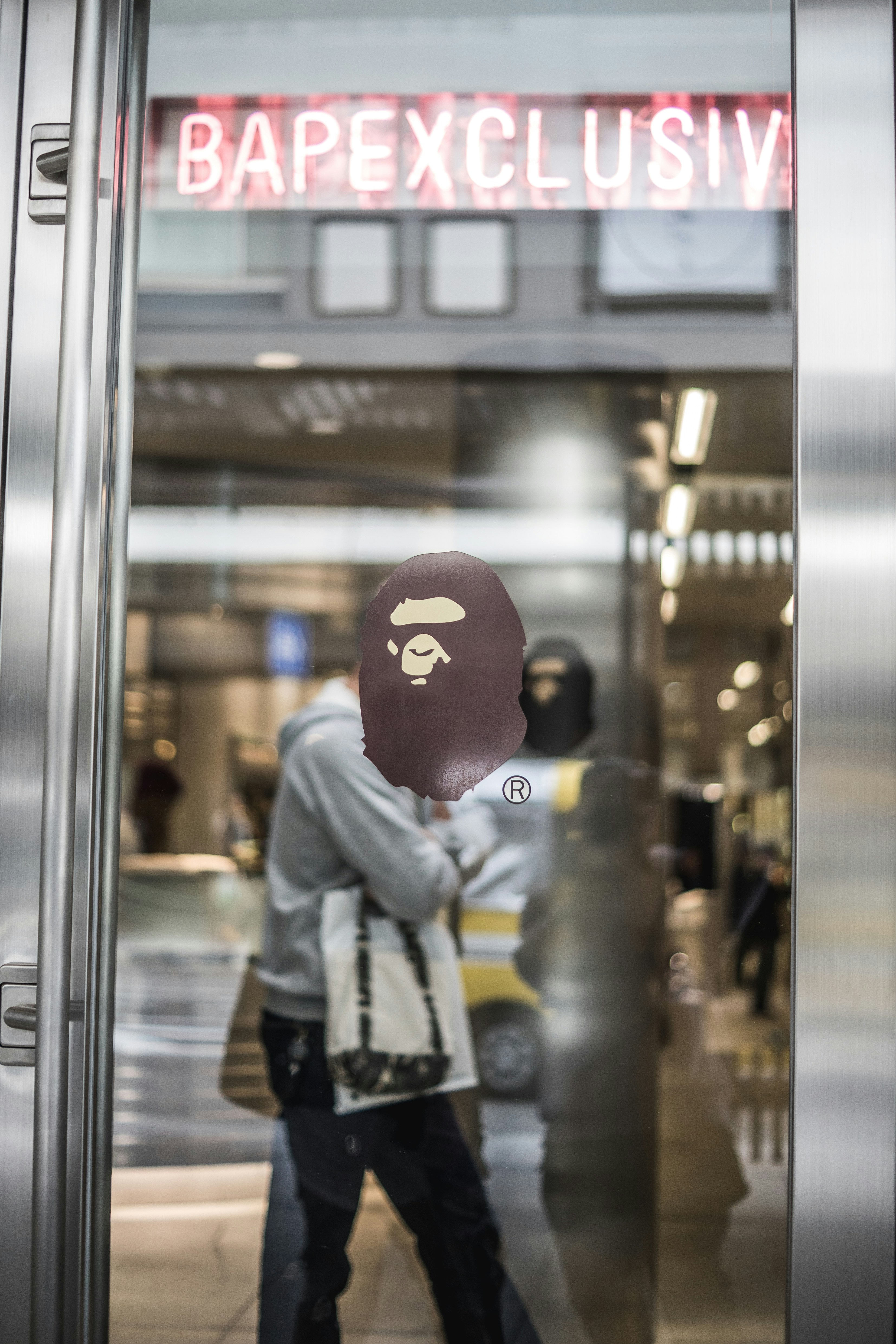
The resulting Ape Head logo became a masterpiece of minimalist iconography. Together, Nigo and Skate Thing created a visual foundation—including the signature Cloud Camo—that would define an entire era. The name itself was a clever piece of social commentary, referencing the Japanese idiom of "a bathing ape in lukewarm water"—a satirical nod to the comfortable, over-indulgent lifestyle of the youth culture Nigo was catering to.
From a design perspective, this highlights the power of a clear visual language. BAPE didn't just sell apparel; they sold a cohesive universe. The lesson for modern creators is that an enduring icon usually starts from a place of genuine curiosity rather than just following a trend.
The Strategy of Community and Scarcity
What truly set the brand apart was Nigo's radical approach to distribution. In a time before digital drops and social media hype, BAPE pioneered the concept of intentional scarcity. Nigo initially produced very limited runs of his designs, often giving away half the stock to influential friends, DJs, and creators who occupied the same circles he did.
By 1998, he made the daring move to cancel all wholesale accounts and consolidate the brand into a single flagship store. This transformed a t-shirt into a collector’s item and established the queuing culture that remains a staple of the industry today. This wasn't necessarily a calculated marketing ploy so much as a reflection of how tight-knit that scene was; it was about building a community where "if you know, you know."
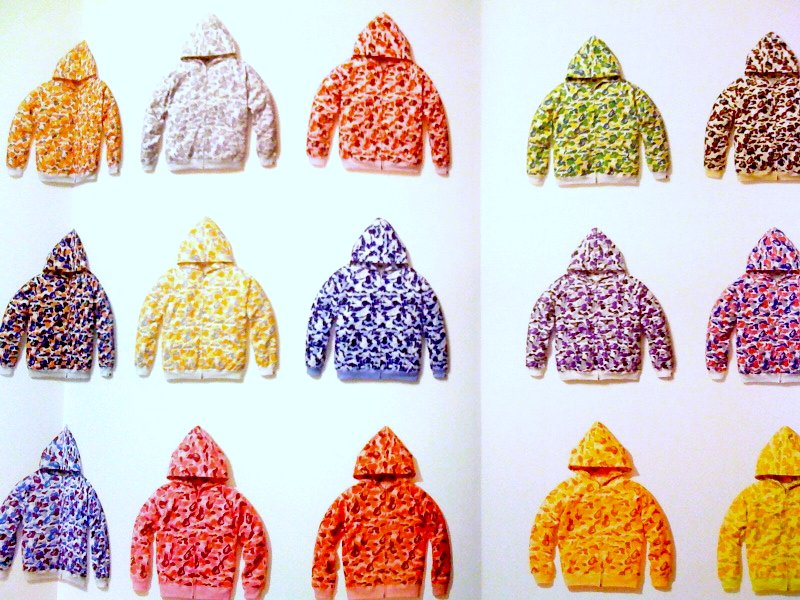
BAPE book by eyesofrc via Flickr
Crossing Oceans: The Global Shift
As the brand moved into the 2000s, its influence crossed oceans. The introduction of the Bapesta—a vibrant, patent-leather reimagining of the classic Air Force 1's—and the full-zip Shark Hoodie gave the brand a distinct visual language that was impossible to ignore.
Through a chance meeting facilitated by Jacob the Jeweler, Nigo connected with Pharrell Williams. Their mutual respect for design and hip-hop culture bridged the gap between Tokyo and the West. When figures like Pharrell and Kanye West began incorporating these pieces into their wardrobes, BAPE’s status shifted from a Tokyo secret to a global powerhouse. It was a reminder that when high-quality products meet a clear strategic vision, a project can truly become a movement.
The Legacy of the Blueprint
Nigo eventually stepped away from the brand in 2013, leaving it in the hands of the I.T Group to start fresh with projects like Human Made. While BAPE has since shifted toward a more commercial, collaboration-heavy model, the original blueprint remains a source of inspiration for designers everywhere.
To understand the current state of streetwear, you have to look back at a specific corner of Tokyo in the early nineties. It was a time when the backstreets of Harajuku, known as Ura-Harajuku, were becoming a laboratory for a new kind of creative energy. At the center of this world was Tomoaki Nagao, a young stylist and editor who would eventually be known to everyone simply as Nigo.
In the world of creative strategy and visual identity, few stories are as instructive as the rise of A Bathing Ape. What began as a small shop evolved into a global case study on how to build brand equity through iconography and community. For designers looking to build their own visual worlds, the BAPE story offers a masterclass in turning a niche subculture into a worldwide phenomenon.
The Foundation of Personal Obsession
The story of BAPE is really a story about personal obsession. Nigo was a kid who grew up captivated by American pop culture—Star Wars, vintage toys, and the early sounds of hip-hop. When he opened his boutique, Nowhere, alongside Jun Takahashi in 1993, it was about creating a physical space for the things he loved, blending vintage Americana with 20th-century pop culture.
This commitment to personal interest is perhaps best captured in the origin of the brand’s visual identity. The name and logo weren't the result of a marketing focus group, but rather a late-night creative spark. The legendary graphic designer Skate Thing, a close collaborator of Nigo’s, reportedly sat through a five-hour marathon of the Planet of the Apes movies. By the end of the session, he had the vision for a brand built around that imagery.
Designing an Iconography
The resulting Ape Head logo became a masterpiece of minimalist iconography. Together, Nigo and Skate Thing created a visual foundation—including the signature Cloud Camo—that would define an entire era. The name itself was a clever piece of social commentary, referencing the Japanese idiom of "a bathing ape in lukewarm water"—a satirical nod to the comfortable, over-indulgent lifestyle of the youth culture Nigo was catering to.
From a design perspective, this highlights the power of a clear visual language. BAPE didn't just sell apparel; they sold a cohesive universe. The lesson for modern creators is that an enduring icon usually starts from a place of genuine curiosity rather than just following a trend.
The Strategy of Community and Scarcity
What truly set the brand apart was Nigo's radical approach to distribution. In a time before digital drops and social media hype, BAPE pioneered the concept of intentional scarcity. Nigo initially produced very limited runs of his designs, often giving away half the stock to influential friends, DJs, and creators who occupied the same circles he did.
By 1998, he made the daring move to cancel all wholesale accounts and consolidate the brand into a single flagship store. This transformed a t-shirt into a collector’s item and established the queuing culture that remains a staple of the industry today. This wasn't necessarily a calculated marketing ploy so much as a reflection of how tight-knit that scene was; it was about building a community where "if you know, you know."
BAPE book by eyesofrc via Flickr
Crossing Oceans: The Global Shift
As the brand moved into the 2000s, its influence crossed oceans. The introduction of the Bapesta—a vibrant, patent-leather reimagining of the classic Air Force 1's—and the full-zip Shark Hoodie gave the brand a distinct visual language that was impossible to ignore.
Through a chance meeting facilitated by Jacob the Jeweler, Nigo connected with Pharrell Williams. Their mutual respect for design and hip-hop culture bridged the gap between Tokyo and the West. When figures like Pharrell and Kanye West began incorporating these pieces into their wardrobes, BAPE’s status shifted from a Tokyo secret to a global powerhouse. It was a reminder that when high-quality products meet a clear strategic vision, a project can truly become a movement.
The Legacy of the Blueprint
Nigo eventually stepped away from the brand in 2013, leaving it in the hands of the I.T Group to start fresh with projects like Human Made. While BAPE has since shifted toward a more commercial, collaboration-heavy model, the original blueprint remains a source of inspiration for designers everywhere.
SHARE
Latest articles