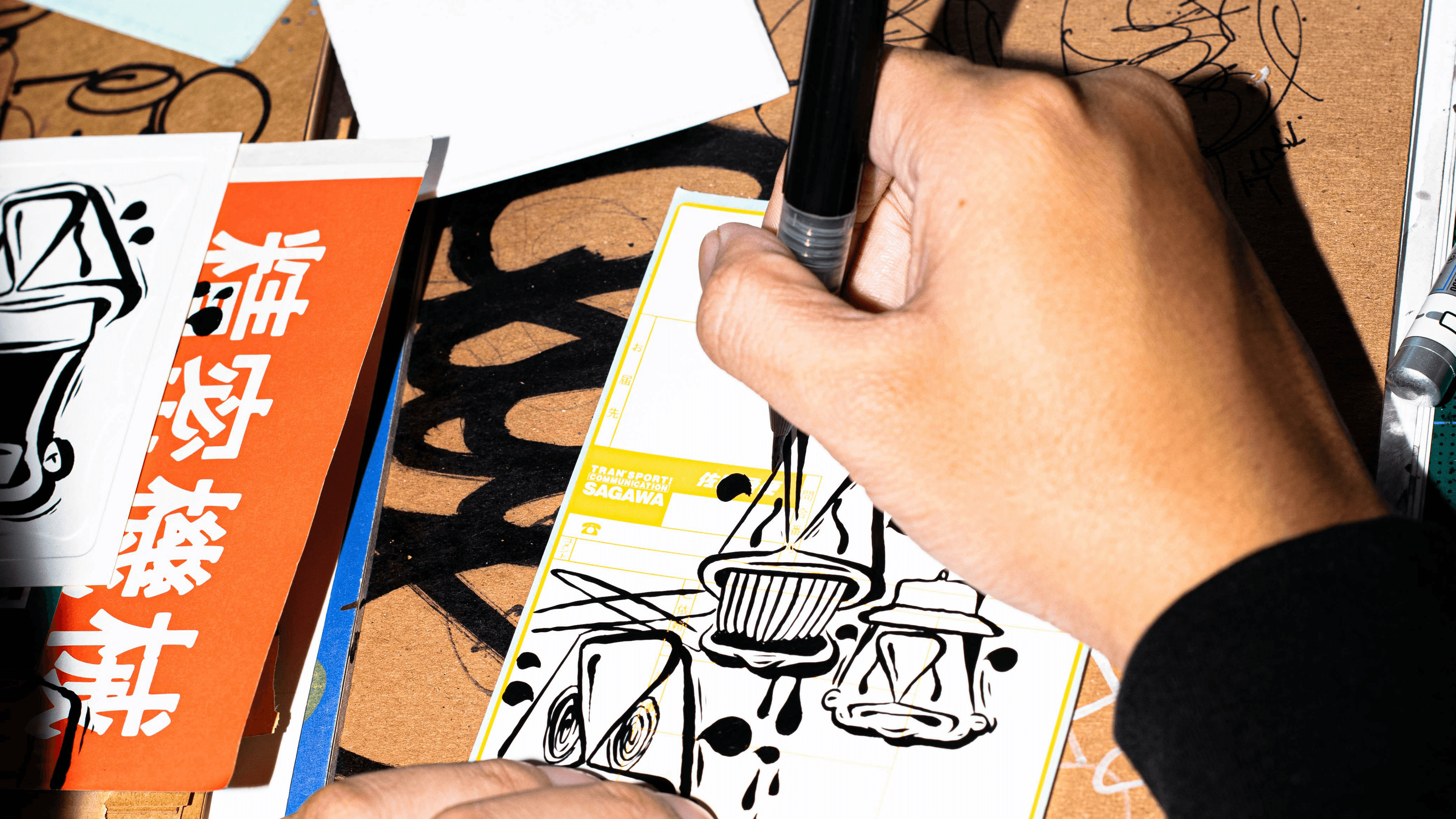
In an industry currently obsessed with hyper-polished, AI-generated outputs, there is a dangerous temptation to skip the most critical phase of the creative process: the messy middle.
We are living in an era where software and AI tools can take a prompt and turn it into a high-fidelity visual in seconds. But speed isn't always the goal. In fact, jumping straight to the "final result" is often the fastest way to kill innovation. Here is why your design process needs to go back to paper.
The Trap of "The Too Precious"
When you start a project directly in software, you are immediately constrained by technical parameters. You start obsessing over kerning, color palettes, and gradients before you’ve even stress-tested the idea.
Once you have a high-fidelity visual on your screen, it becomes "too precious." You subconsciously stop exploring because you don’t want to break what looks "finished." Sketching, however, is inherently low-fidelity. It allows you to produce ten bad ideas so you can find the brilliant one. On paper, there is no fear of failure, it’s all about exploration.
Thinking vs. Executing
Design is 80% thinking and 20% execution. AI tools are fantastic at execution, but they are notoriously bad at thinking.
Sketching is a direct connection between your intuition and the page. It’s where you map out storyboards for a rave flyer or sketch a brand system architecture without worrying if the vector points align. By forcing yourself to hand-sketch, you prioritize the narrative and the flow. If the idea doesn't work on a napkin with a pen, no amount of post-production magic is going to save it.
The Power of Human Imperfection
There is a rising fatigue in the market. As AI visuals become standardized and "perfectly" uniform, the human touch is becoming a luxury.
Modern brands, especially in the independent and streetwear sectors, are craving grit, soul, and human error. Sketching allows for those "happy accidents" that algorithms simply cannot replicate. When you design on screen, you tend to default to the tools' logic. When you design on paper, you default to your own. That’s where the real magic lives.
Slowing Down to Speed Up
It sounds counterintuitive, but taking an hour or two to sketch at the beginning of a project is the single best way to save time later.
When you define your creative direction through rough storyboards and rapid ideation, you eliminate the endless cycles of feedback and revision that happen when you "guess" the aesthetic in the software. You aren't just designing; you are strategizing.
The takeaway? Don’t let the ease of digital tools make you lazy. Your best work doesn't live in a plugin or a prompt. It lives in the messy, unpolished, and human exploration that happens before the screen even lights up.