Fairfax Avenue: a Street that Defined an Era
Fairfax Avenue: a Street that Defined an Era
The story of Fairfax Avenue is a masterclass in how a physical space can be transformed into a global brand.
Long before it was the epicenter of hypebeast culture, Fairfax was a quiet stretch of Los Angeles defined by historic Jewish delis and the kind of cheap rent that acts as a magnet for the underground.
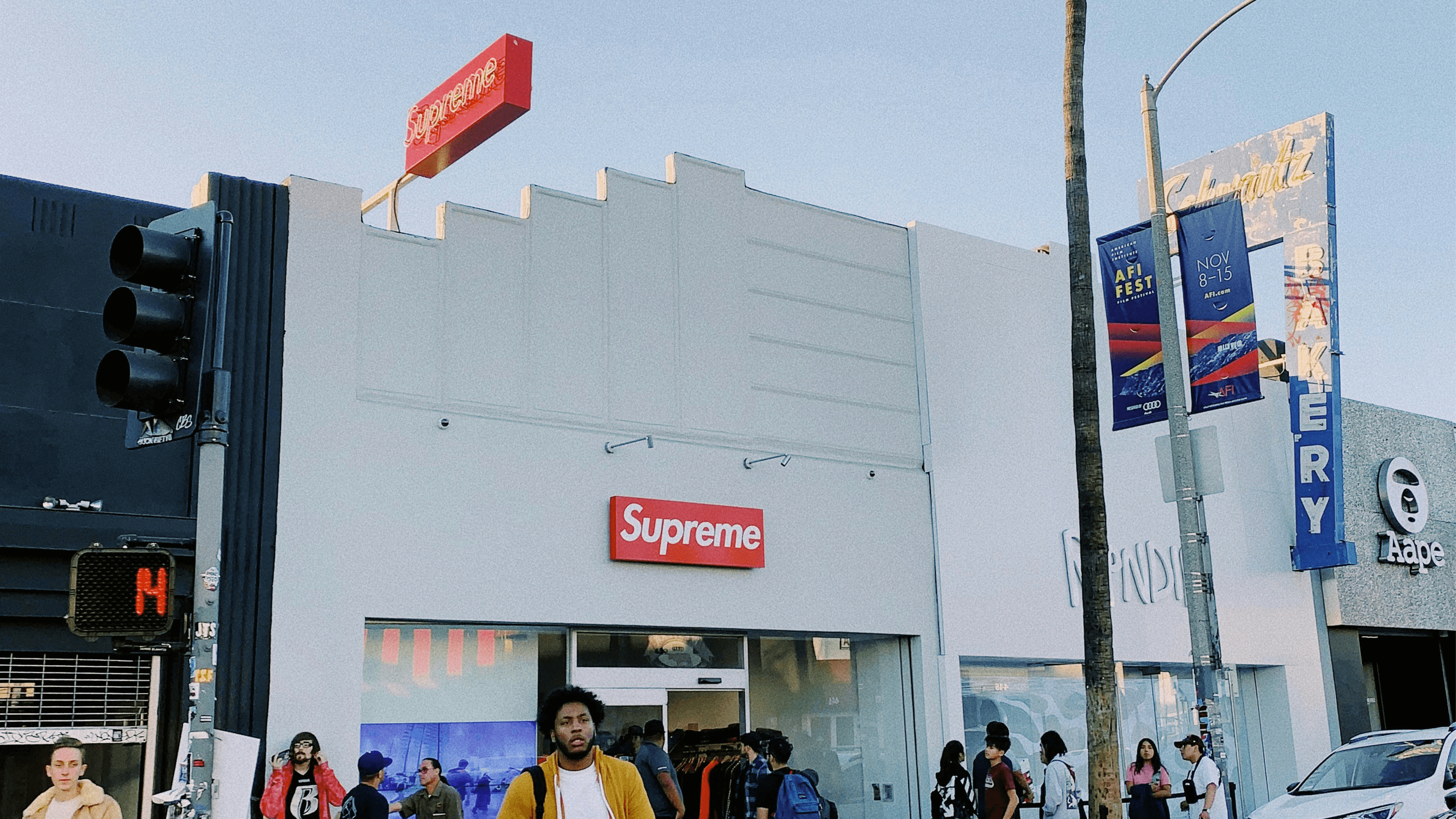
The real shift began in 2004 when a then-underground skate shop called Supreme decided to set up shop. By building a skate bowl inside the store, they signaled that this wasn't just a shop—it was a lighthouse for a specific subculture, triggering a chain reaction that would eventually turn these few blocks into the Mecca of Streetwear.
The Architecture of a Community
This single opening created a creative ecosystem where pioneers like Sal Barbier with SLB and the intellectual, book-heavy curation of Reserve began to fill the gaps.
However, the magic of Fairfax was always about the spontaneity of the street. The Hundreds, founded by Bobby Kim and Ben Shenassafar in 2005, understood this better than anyone. Their flagship functioned less like a store and more like a community clubhouse. After hours, the space transformed into a meeting ground for artists and rappers, documented in real-time on Bobby’s blog, which gave the rest of the world a window into a lifestyle they couldn't yet access.
The Diamond Standard and the Odd Future Effect
As the neighborhood evolved, Diamond Supply Co. emerged as the bridge between the grit of raw skateboarding and the aspirational flash of the music industry. During the Golden Era of the block, the Diamond flagship was impossible to miss, with its signature Diamond Blue aesthetic cutting through the urban landscape.
It served as a primary playground for the Odd Future collective long before they were household names. You could walk the block and see Tyler, the Creator and the crew bouncing between Supreme and Diamond, essentially using the sidewalk as their office and their stage. From a branding perspective, Diamond mastered the art of the high-low mix, proving that a brand rooted in the streets could command the same visual prestige as a luxury house.
The Peak of Hype and Pop Culture
By 2011, the Odd Future effect turned a local enclave into a global vanguard for what was happening next in the culture. The hype was no longer a secret; it was a digital phenomenon that drew swarms of people from all over the globe. This was the era where waiting in line became a status symbol in itself.
The street became so culturally significant that it was eventually immortalized by Matthew Hausfater, who created an adult animated comedy series for Amazon Prime Video titled Fairfax, released in 2021. The show followed four middle school friends on a quest for popularity at the pulsing heart of hypebeast culture, signaling that the neighborhood had officially moved from the fringes into the center of the global zeitgeist.
The End of an Era and the New Identity
As the saying goes, identity gets tarnished when it becomes mainstream. By 2013, the emerging resell culture began to cannibalize the community spirit that built the block. The spontaneity that made the street legendary—the random BBQs and the organic skate sessions—was slowly replaced by destination-based shopping and clinical transactions. When Supreme moved to Sunset Boulevard in 2023, and The Hundreds shuttered its final physical space on the avenue in 2025, it marked the end of an era.
Fairfax isn't a ghost town today—it’s just different. It became a curated corridor for established names like GOLF WANG and Ripndip. While the "good-old-days" might now exist as vestiges of a time when LA was the undisputed Mecca of sharing and good times, the legacy of those blocks remains the ultimate blueprint for the industry.
Fairfax taught us that you don't build a movement by just selling products; you build it by creating a space where people feel like they belong to something bigger than the clothes themselves.
The story of Fairfax Avenue is a masterclass in how a physical space can be transformed into a global brand.
Long before it was the epicenter of hypebeast culture, Fairfax was a quiet stretch of Los Angeles defined by historic Jewish delis and the kind of cheap rent that acts as a magnet for the underground.
The real shift began in 2004 when a then-underground skate shop called Supreme decided to set up shop. By building a skate bowl inside the store, they signaled that this wasn't just a shop—it was a lighthouse for a specific subculture, triggering a chain reaction that would eventually turn these few blocks into the Mecca of Streetwear.
The Architecture of a Community
This single opening created a creative ecosystem where pioneers like Sal Barbier with SLB and the intellectual, book-heavy curation of Reserve began to fill the gaps.
However, the magic of Fairfax was always about the spontaneity of the street. The Hundreds, founded by Bobby Kim and Ben Shenassafar in 2005, understood this better than anyone. Their flagship functioned less like a store and more like a community clubhouse. After hours, the space transformed into a meeting ground for artists and rappers, documented in real-time on Bobby’s blog, which gave the rest of the world a window into a lifestyle they couldn't yet access.
The Diamond Standard and the Odd Future Effect
As the neighborhood evolved, Diamond Supply Co. emerged as the bridge between the grit of raw skateboarding and the aspirational flash of the music industry. During the Golden Era of the block, the Diamond flagship was impossible to miss, with its signature Diamond Blue aesthetic cutting through the urban landscape.
It served as a primary playground for the Odd Future collective long before they were household names. You could walk the block and see Tyler, the Creator and the crew bouncing between Supreme and Diamond, essentially using the sidewalk as their office and their stage. From a branding perspective, Diamond mastered the art of the high-low mix, proving that a brand rooted in the streets could command the same visual prestige as a luxury house.
The Peak of Hype and Pop Culture
By 2011, the Odd Future effect turned a local enclave into a global vanguard for what was happening next in the culture. The hype was no longer a secret; it was a digital phenomenon that drew swarms of people from all over the globe. This was the era where waiting in line became a status symbol in itself.
The street became so culturally significant that it was eventually immortalized by Matthew Hausfater, who created an adult animated comedy series for Amazon Prime Video titled Fairfax, released in 2021. The show followed four middle school friends on a quest for popularity at the pulsing heart of hypebeast culture, signaling that the neighborhood had officially moved from the fringes into the center of the global zeitgeist.
The End of an Era and the New Identity
As the saying goes, identity gets tarnished when it becomes mainstream. By 2013, the emerging resell culture began to cannibalize the community spirit that built the block. The spontaneity that made the street legendary—the random BBQs and the organic skate sessions—was slowly replaced by destination-based shopping and clinical transactions. When Supreme moved to Sunset Boulevard in 2023, and The Hundreds shuttered its final physical space on the avenue in 2025, it marked the end of an era.
Fairfax isn't a ghost town today—it’s just different. It became a curated corridor for established names like GOLF WANG and Ripndip. While the "good-old-days" might now exist as vestiges of a time when LA was the undisputed Mecca of sharing and good times, the legacy of those blocks remains the ultimate blueprint for the industry.
Fairfax taught us that you don't build a movement by just selling products; you build it by creating a space where people feel like they belong to something bigger than the clothes themselves.
SHARE
Latest articles