Why Typography is the Last Frontier of Brand Design
Why Typography is the Last Frontier of Brand Design
We are currently witnessing the "Great Flattening." As AI-generated aesthetics become the default, the visual landscape is merging into a single, polished blur of statistical averages. When everyone uses the same prompts and the same template libraries, "good" design becomes a commodity.
In this era of automated perfection, the challenge isn’t just to look different—it’s to feel real. To achieve this, we have to look past the surface level of "cool visuals" and focus on the structural elements that actually anchor a brand’s identity. Among these, typography stands as perhaps the most vital, yet often misunderstood, pillar of the branding ecosystem.
Typography in the Branding Orchestra
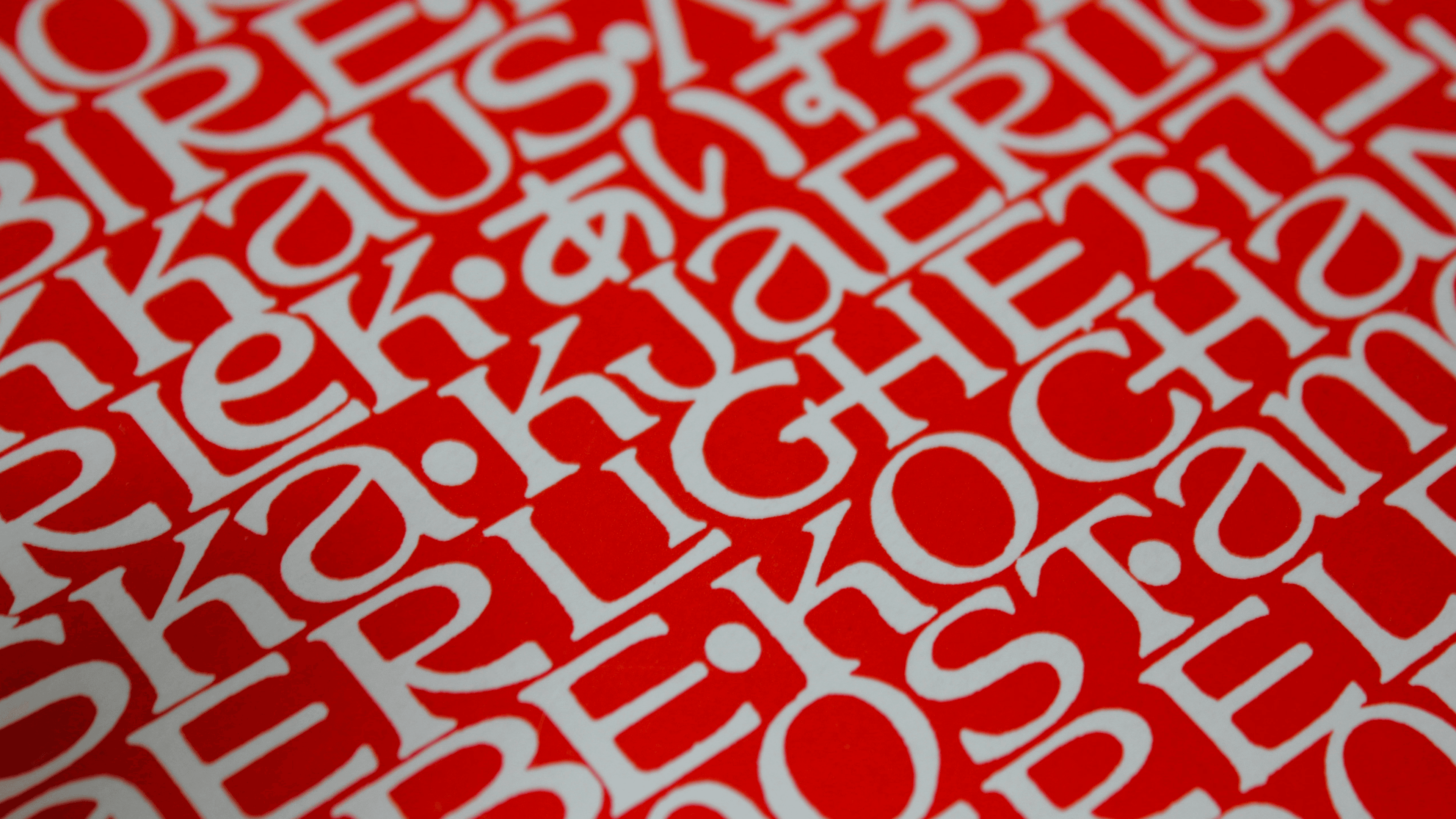
Typography is more than just "fonts." It is the idealization of writing itself—the visceral human urge to record memories, ideas, and aspirations. Since the 15th-century Gutenberg revolution, printed letters have served as the primary vehicle for culture.
In branding, typography acts as the "inner mechanism." Much like a Swiss watch, where every gear must be perfectly placed to signal precision and value, typography creates a rhythm through kerning, optical balance, and weight. Typography serves as the bridge between a brand's abstract values and its physical presence.
Forms and feelings
The emotional resonance of a brand is rarely an accident; it is the result of visual semiotics—the study of how shapes create meaning. A high-contrast serif doesn’t merely look "elegant"; it carries the gravity of history and the institutional authority of the printed word. Conversely, a geometric sans-serif doesn’t just look "clean"; it signals transparency, logic, and industrial efficiency. When these typographic choices are aligned with a brand’s color palette and photographic style, they create a cohesive emotional universe that feels unmistakable to the audience.
Historically, the world’s most enduring brands leaned into this; they weren't afraid to let typography carry raw emotion and distinct character. However, as branding became more systematized, much of that character was sanded down. Efficiency began to outweigh expression. We lost the "weird" and the "bold" in favor of a sterile, Swiss-modernist functionality that worked at scale but lacked a pulse. Now, as AI enters the chat, this homogenization is happening at internet speed.
Designing Beyond the Prompt
While AI can generate a stunning image in seconds, the world of functional, high-end type design remains a human stronghold. This is partly because vector design is significantly more complex for current AI models to master. True type design requires a trained eye that understands the nuance of negative space, cultural context, and the "voice" of a letterform.
In a world where anyone can "generate" a look, intentionality becomes your greatest competitive advantage. Choosing (or building) a typeface is a signal of craft. It tells the audience that this brand wasn't assembled by an algorithm looking for the path of least resistance. It was built by someone who cared enough to define how every single character reflects the brand's soul.
The Anchor of the Brand System
It’s important to remember: typography is not a "savior." A great font cannot fix a broken strategy or a lack of visual direction. However, in a robust brand system, typography acts as the anchor. It is the most frequent touchpoint a customer has with a brand, from the website buttons to the fine print on the packaging.
If the visuals create the first impression, the typography sustains the relationship. It is the element that remains consistent when the photography changes or the campaign ends. It provides the long-term structural integrity that allows a brand to scale without losing its identity.
Building for the Human Era
The brands that will thrive in the next few years won't be those with the "slickest" AI-generated assets. They will be the ones that feel undeniably human—brands that embrace character, nuance, and even a bit of "weirdness."
Typography remains our most powerful tool for signaling this humanity. It is the thread that connects the 15th-century craftsmanship of the printing press to the high-speed interfaces of tomorrow. By focusing on typography not as a standalone solution, but as the structural heart of the brand system, we move away from "templates" and back toward creation.
We are currently witnessing the "Great Flattening." As AI-generated aesthetics become the default, the visual landscape is merging into a single, polished blur of statistical averages. When everyone uses the same prompts and the same template libraries, "good" design becomes a commodity.
In this era of automated perfection, the challenge isn’t just to look different—it’s to feel real. To achieve this, we have to look past the surface level of "cool visuals" and focus on the structural elements that actually anchor a brand’s identity. Among these, typography stands as perhaps the most vital, yet often misunderstood, pillar of the branding ecosystem.
Typography in the Branding Orchestra
Typography is more than just "fonts." It is the idealization of writing itself—the visceral human urge to record memories, ideas, and aspirations. Since the 15th-century Gutenberg revolution, printed letters have served as the primary vehicle for culture.
In branding, typography acts as the "inner mechanism." Much like a Swiss watch, where every gear must be perfectly placed to signal precision and value, typography creates a rhythm through kerning, optical balance, and weight. Typography serves as the bridge between a brand's abstract values and its physical presence.
Forms and feelings
The emotional resonance of a brand is rarely an accident; it is the result of visual semiotics—the study of how shapes create meaning. A high-contrast serif doesn’t merely look "elegant"; it carries the gravity of history and the institutional authority of the printed word. Conversely, a geometric sans-serif doesn’t just look "clean"; it signals transparency, logic, and industrial efficiency. When these typographic choices are aligned with a brand’s color palette and photographic style, they create a cohesive emotional universe that feels unmistakable to the audience.
Historically, the world’s most enduring brands leaned into this; they weren't afraid to let typography carry raw emotion and distinct character. However, as branding became more systematized, much of that character was sanded down. Efficiency began to outweigh expression. We lost the "weird" and the "bold" in favor of a sterile, Swiss-modernist functionality that worked at scale but lacked a pulse. Now, as AI enters the chat, this homogenization is happening at internet speed.
Designing Beyond the Prompt
While AI can generate a stunning image in seconds, the world of functional, high-end type design remains a human stronghold. This is partly because vector design is significantly more complex for current AI models to master. True type design requires a trained eye that understands the nuance of negative space, cultural context, and the "voice" of a letterform.
In a world where anyone can "generate" a look, intentionality becomes your greatest competitive advantage. Choosing (or building) a typeface is a signal of craft. It tells the audience that this brand wasn't assembled by an algorithm looking for the path of least resistance. It was built by someone who cared enough to define how every single character reflects the brand's soul.
The Anchor of the Brand System
It’s important to remember: typography is not a "savior." A great font cannot fix a broken strategy or a lack of visual direction. However, in a robust brand system, typography acts as the anchor. It is the most frequent touchpoint a customer has with a brand, from the website buttons to the fine print on the packaging.
If the visuals create the first impression, the typography sustains the relationship. It is the element that remains consistent when the photography changes or the campaign ends. It provides the long-term structural integrity that allows a brand to scale without losing its identity.
Building for the Human Era
The brands that will thrive in the next few years won't be those with the "slickest" AI-generated assets. They will be the ones that feel undeniably human—brands that embrace character, nuance, and even a bit of "weirdness."
Typography remains our most powerful tool for signaling this humanity. It is the thread that connects the 15th-century craftsmanship of the printing press to the high-speed interfaces of tomorrow. By focusing on typography not as a standalone solution, but as the structural heart of the brand system, we move away from "templates" and back toward creation.
SHARE
Latest articles