Beyond the Snacks: Decoding Japan’s Konbini Culture
Beyond the Snacks: Decoding Japan’s Konbini Culture
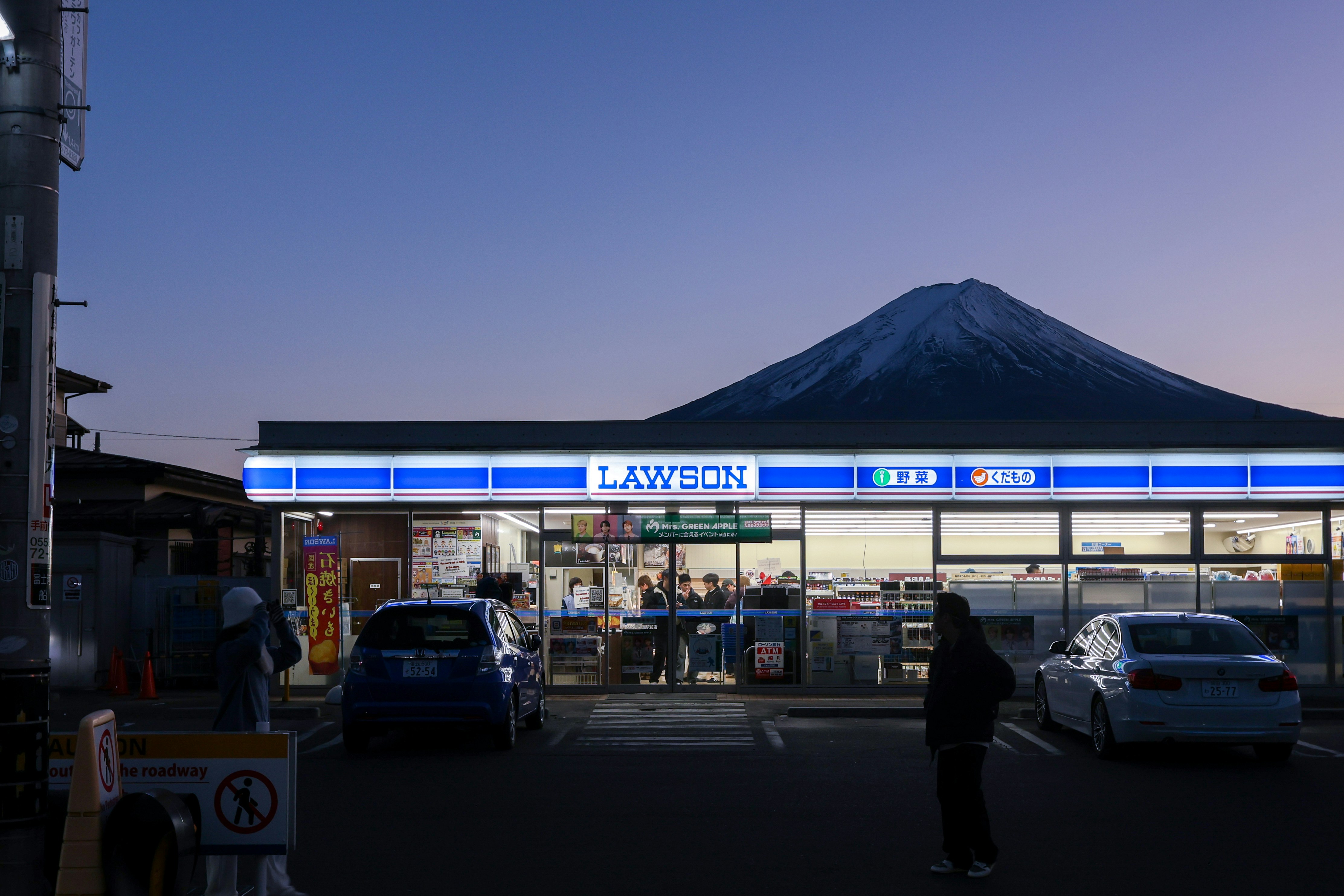
If you find yourself lost in the labyrinthine streets of Tokyo at 2:00 AM, the most comforting sight is the omnipresent glow of a konbini sign. Short for konbiniten—a linguistic mashup of "convenience" and "store"—these outlets have transcended their humble retail origins to become 24-hour shrines of modern efficiency. With over 56,000 locations nationwide, there is roughly one store for every 2,000 people, creating a retail density that makes the konbini the literal bedrock of Japanese urban life.
From Import to Cultural Icon
The story began in 1974 when 7-Eleven first introduced the around-the-clock concept from the US. However, what started as an import quickly evolved into a uniquely Japanese phenomenon. While the "Holy Trinity"—7-Eleven, FamilyMart, and Lawson—dominates the market share, the ecosystem is far more diverse. You’ll find Ministop with its dedicated seating areas, Daily Yamazaki baking fresh bread on-site, and the specialized Natural Lawson, which caters to a more "aesthetic" crowd with organic curation and gourmet imports.
What truly differentiates this culture is a level of quality that defies the "gas station food" stereotypes of the West. These are culinary hubs where you can find Michelin-starred ramen collaborations or the legendary tamago sando—the airy egg salad sandwich Anthony Bourdain famously dubbed "pillows of love." From the perfectly textured onigiri to the crispy, cult-favorite Famichiki, the food isn't just convenient; it’s a benchmark of consistent, high-quality industrial design.

A shelf of Soda Cans, by Ridger
Seasonality is the heartbeat of the konbini. The shelves act as a temporal calendar: you’ll see steaming pots of oden stew and chestnut cakes in the winter, only to be replaced by sakura-themed chocolates in the spring and refreshing shaved ice (kakigōri) when the humidity hits. This constant rotation of roughly 3,000 products per store ensures that the experience never feels stagnant, turning a routine snack run into a discovery of limited-edition drops.
Beyond the snacks, the konbini operates as the Swiss Army knife of social infrastructure. It is a mini-branch of the bank, the post office, and the local ticket office all in one. You can pay your utility bills at the counter, ship your luggage across the country via Takkyubin services, or pick up highly coveted Studio Ghibli Museum passes. For the traveler, it’s a lighthouse—a place to find clean bathrooms, reliable ATMs, and even professional-grade printing services.
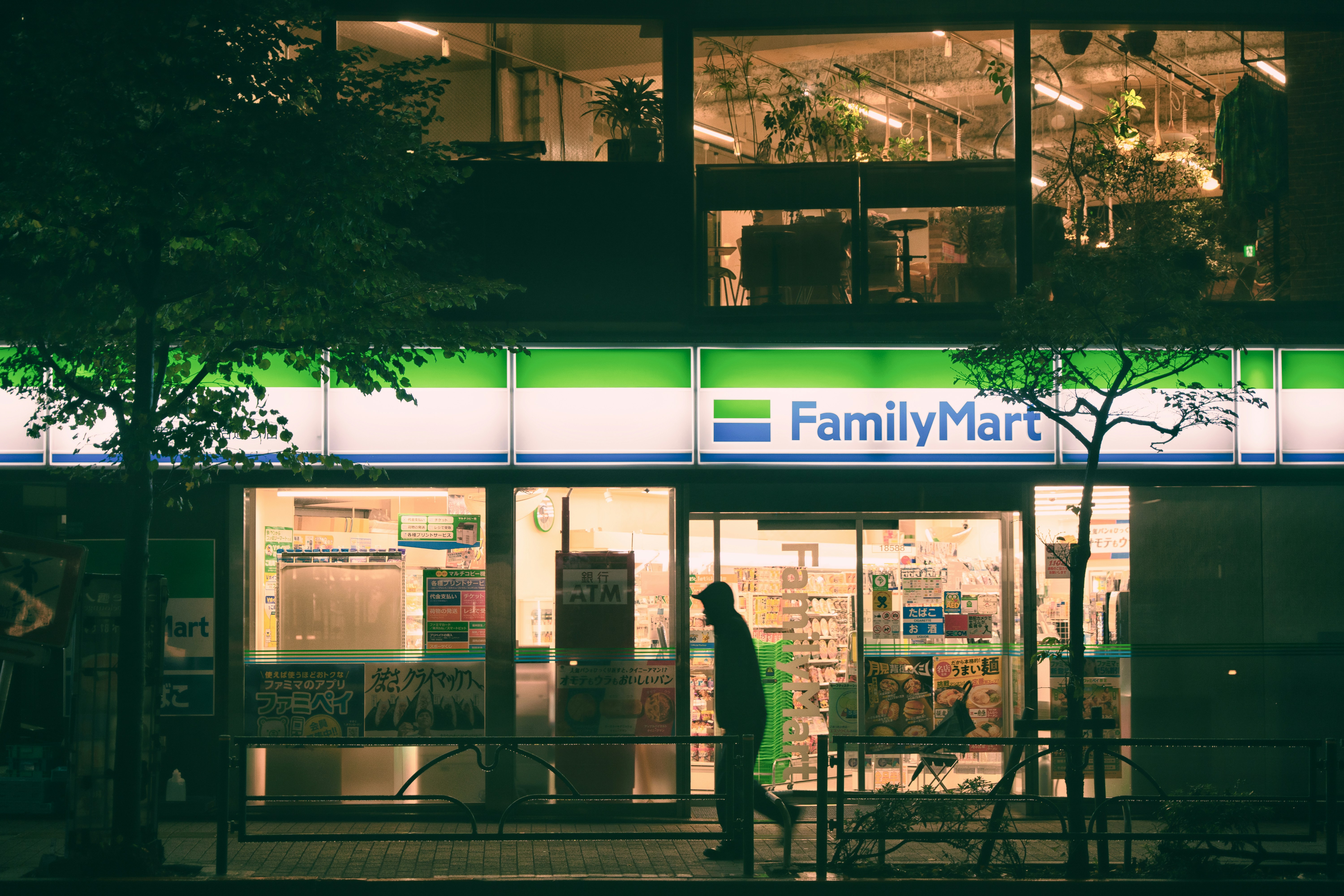
Family Mart facade, by Ayumi Kubo
The Rise of "Konbini Couture”
In recent years, the line between utility and "lifestyle" has blurred significantly. We’ve seen the rise of "Konbini Couture," where functional basics are reimagined through a design lens. A prime example is the long-standing partnership between FamilyMart and Muji, bringing minimalist stationery and skincare to the masses. Even simple items like FamilyMart’s signature green-and-blue striped socks became an overnight hype item after being spotted on Japanese icons like Takuya Kimura.
The konbini has become a playground for visual identity, where even the packaging of a tuna mayo rice ball is cool. It’s a space where "high-ticket" design principles are applied to low-cost, everyday items, proving that good design shouldn't be a luxury—it should be accessible on every street corner.
The final piece of this cultural puzzle clicked into place with the announcement that NIGO—the mastermind behind BAPE, Human Made, and Kenzo—has taken the reigns as Creative Director for FamilyMart. Set to debut in Spring 2026, his influence represents the ultimate convergence of streetwear sensibility and mass retail. When a pioneer of global "hype" culture begins overseeing the aesthetics of a convenience store, it confirms what we’ve long suspected: the next frontier of design isn't in a boutique, but right there on the shelf next to your iced coffee.
If you find yourself lost in the labyrinthine streets of Tokyo at 2:00 AM, the most comforting sight is the omnipresent glow of a konbini sign. Short for konbiniten—a linguistic mashup of "convenience" and "store"—these outlets have transcended their humble retail origins to become 24-hour shrines of modern efficiency. With over 56,000 locations nationwide, there is roughly one store for every 2,000 people, creating a retail density that makes the konbini the literal bedrock of Japanese urban life.
From Import to Cultural Icon
The story began in 1974 when 7-Eleven first introduced the around-the-clock concept from the US. However, what started as an import quickly evolved into a uniquely Japanese phenomenon. While the "Holy Trinity"—7-Eleven, FamilyMart, and Lawson—dominates the market share, the ecosystem is far more diverse. You’ll find Ministop with its dedicated seating areas, Daily Yamazaki baking fresh bread on-site, and the specialized Natural Lawson, which caters to a more "aesthetic" crowd with organic curation and gourmet imports.
What truly differentiates this culture is a level of quality that defies the "gas station food" stereotypes of the West. These are culinary hubs where you can find Michelin-starred ramen collaborations or the legendary tamago sando—the airy egg salad sandwich Anthony Bourdain famously dubbed "pillows of love." From the perfectly textured onigiri to the crispy, cult-favorite Famichiki, the food isn't just convenient; it’s a benchmark of consistent, high-quality industrial design.
A shelf of Soda Cans, by Ridger
Seasonality is the heartbeat of the konbini. The shelves act as a temporal calendar: you’ll see steaming pots of oden stew and chestnut cakes in the winter, only to be replaced by sakura-themed chocolates in the spring and refreshing shaved ice (kakigōri) when the humidity hits. This constant rotation of roughly 3,000 products per store ensures that the experience never feels stagnant, turning a routine snack run into a discovery of limited-edition drops.
Beyond the snacks, the konbini operates as the Swiss Army knife of social infrastructure. It is a mini-branch of the bank, the post office, and the local ticket office all in one. You can pay your utility bills at the counter, ship your luggage across the country via Takkyubin services, or pick up highly coveted Studio Ghibli Museum passes. For the traveler, it’s a lighthouse—a place to find clean bathrooms, reliable ATMs, and even professional-grade printing services.
Family Mart facade, by Ayumi Kubo
The Rise of "Konbini Couture”
In recent years, the line between utility and "lifestyle" has blurred significantly. We’ve seen the rise of "Konbini Couture," where functional basics are reimagined through a design lens. A prime example is the long-standing partnership between FamilyMart and Muji, bringing minimalist stationery and skincare to the masses. Even simple items like FamilyMart’s signature green-and-blue striped socks became an overnight hype item after being spotted on Japanese icons like Takuya Kimura.
The konbini has become a playground for visual identity, where even the packaging of a tuna mayo rice ball is cool. It’s a space where "high-ticket" design principles are applied to low-cost, everyday items, proving that good design shouldn't be a luxury—it should be accessible on every street corner.
The final piece of this cultural puzzle clicked into place with the announcement that NIGO—the mastermind behind BAPE, Human Made, and Kenzo—has taken the reigns as Creative Director for FamilyMart. Set to debut in Spring 2026, his influence represents the ultimate convergence of streetwear sensibility and mass retail. When a pioneer of global "hype" culture begins overseeing the aesthetics of a convenience store, it confirms what we’ve long suspected: the next frontier of design isn't in a boutique, but right there on the shelf next to your iced coffee.
SHARE
Latest articles